Wednesday, November 29, 2017

A Man Called Ove Discussion Guide


Book:        A Man Called Ove
Author:    Fredrik Backman
Edition:    Softcover

Please see my new website Relevant Reads for the book discussion guide to A Man Called Ove.

Sunday, October 22, 2017

The Trouble with Goats and Sheep Discussion Guide

Book:     The Trouble with Goats and Sheep
Author:  Joanna Cannon
Edition:  Softcover 

This book guide has moved to my new blog, Relevant Reads. Please find all my new guides there.

Sunday, October 15, 2017

A Gentleman in Moscow Discussion Guide

Book:     A Gentleman in Moscow 
Author:  Amor Towles 
Edition:  Hardcover 


This book discussion guide, has moved to my new website, Relevant ReadsPlease find all of my new book discussion guides there.

Thursday, February 16, 2017

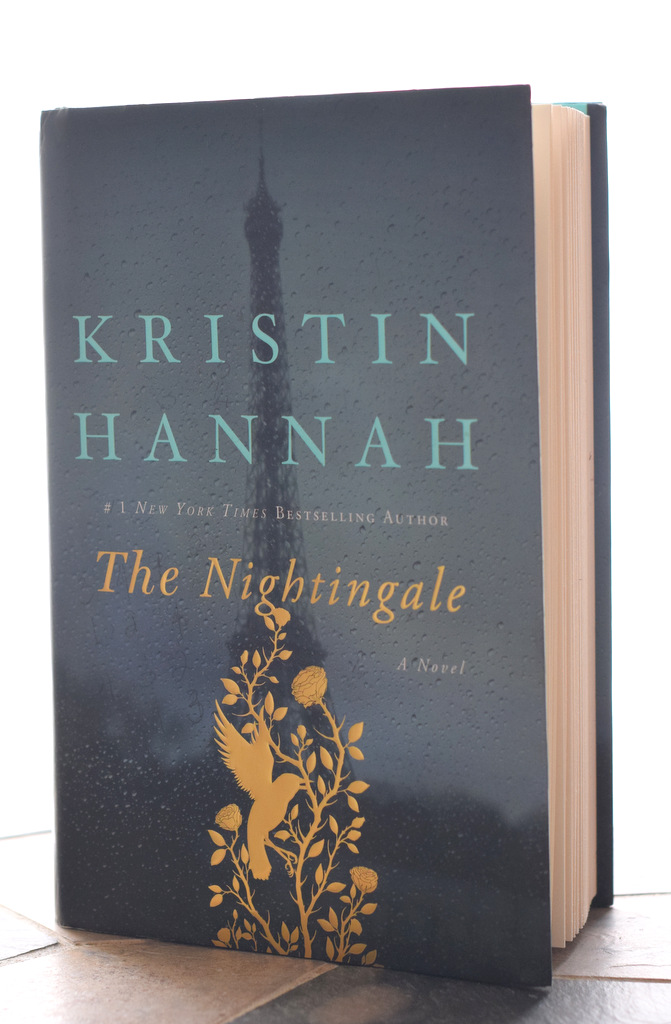
The Nightingale Discussion Guide

Book: The Nightingale
Author:  Kristin Hannah
Edition:  Hardcover St. Martin’s Press, 2015

This book guide has moved to my new blog, Relevant Reads. Please find all my new guides there.

Sunday, January 29, 2017

Homegoing Discussion Guide

Photo of book Homegoing
Book: Homegoing
Author:  Yaa Gyasi
Edition:  Hardcover Alfred A. Knopf 2016 and the kindle version

How racism, culture, and personal choices shape the lives of individuals and history of a people. Collectively the individual stories are interwoven that none stands on its own, yet in this novel each story does precisely that, both like a window cracked open to let in a moment, and interwoven with the stories before and after to create a mosaic of time that is incredibly intricate and fulfilling by the end of the novel.

This discussion guide has moved to my new website, Relevant Reads. Please find all of my new book group guides there.

Saturday, January 23, 2016

Saturday, October 10, 2015

Themed Groups of Books for your Book Group

As your group selects books, consider reading three or four in a row that have a common element. Here are four examples you might consider:

  1.  Art: The Goldfinch, The Girl You Left Behind and People of the Book are all worthy of in-depth discussion. Each approaches art from a very different perspective. 

  2.  Secrets: Secret-keeping is an incredibly common theme in well-written books— perhaps a secret compels an author to write. The Circle, The Death of Bees, Sarah’s Key, Incognito: The Secret Lives of the Brain are four great choices. The first three are novels, each quite different from the other, the fourth is a non-fiction book which could be read as the first in the series. 

  3. End of Life: God’s Hotel, The Art of Racing in the Rain and Me Before You all incorporate characters facing the end of life both personally and through the eyes of another character. 

  4. Point of View: Eleven, Orphan Train and Let the Great World Spin each offer multiple points of view throughout the novel. But many other books could be added to this list as often an author changes the point of view as the time period shifts back and forth between the past and the present.

Monday, July 6, 2015

The Circle Book Discussion Guide

Book:    The Circle
Author:  Dave Eggers
Edition:  Softcover, First Vintage Books, 2014


A novel that hits you over the head with its message of power and the power of controlling information right through the final soliloquy that spells the message out directly. The soliloquy may be directed at the reader who missed the obvious symbolism and direct commentary throughout the book, or, more likely, the reader who skim-read and needs to get the main points for English class tomorrow. 

Regardless, I thoroughly enjoyed the story, perhaps more so because I listened to it. The audio book reader is particularly adept conveying the frenetic pace of information overload.

The Circle offers a superb platform for high school English class discussions of the pros and cons of the volume of information collected and stored today and the power wielded by those who control it. Hopefully those youthful discussions can tease out the middle road: how to ensure a glass half full balances the collection, control and use of information today. 

Even though it completely lacks subtly and the primary characters are flat caricatures, adults may well enjoy this book as a launching point for discussing how we can balance the benefits and drawbacks of social media, gathering personal information and tracking individuals. And even more importantly, how to retain the humanity of relationships alongside our consumption of information.

Internet Resources

There are an abundance of resources on the changing face of privacy in the age of ubiquitous technology.  From the multitude of Ted Talks alone, here are two focused on why privacy matters that you can watch before your book discussion or even as a group and discuss them in real-time.

In his Ted Talk, Why Privacy Matters, Glenn Greenwald talks about how the internet has become a zone of mass indiscriminate surveillance and shares directly why there is harm in exposing privacy even when there is “nothing to hide.”

 The second talk is by Alessandro Acquisiti who talks about technology trends in surveillance and how we can do things differently.

The NPR podcast the Ted Radio Hour has a whole podcast on privacy, which includes sections of Acuisiti’s talk.  The show presents differing perspectives around the same issues, and helps to frame a discussion that laypeople can participate in without understanding the technology underlying the online privacy debate.

In addition, there are articles reflecting on all aspects of privacy from relationships to EU entanglements with Google, here are three from Wired:

Major Characters

Mae Holland, new employee to The Circle who becomes a spokesperson when she becomes the second Circler to become transparent
Mercer, one of Mae’s boyfriends in high school and college who doesn't share Mae's views of openness
Vinnie, Mae’s father, suffering from MS
Bonnie, Mae’s mother 
Annie, Mae’s college roommate and in the gang of 40, part of the inner Circle
Jared, Mae’s trainer as a new employee
Ty Gospodinov, The Circle’s boy-wonder visionary and founder, one of the Three Wise Men
Tom Stenton, The Circle CEO, cunning, and one of the Three Wise Men
Eamon Bailey, public face of The Circle, acts the stooge, and one of the Three Wise Men
Kalden, mysterious man whom Mae meets and turns out to be Ty

Discussion Topics

The following are offered as starting points for discussion to see how much variance and awareness there is among your book group members on technology. If you watch the Ted Talks or read the Wired articles or listen to the Ted Radio Hour, you will likely start many threads of conversation before you even have time to glance at the ones that follow.

Relationships

How do you view relationships and the quality of relationships?  Is there a balance in your view between the quantity and quality of relationships you have? What is required to develop and nurture relationships?  How is this helped or at odds with new technologies?
“Every time I see or hear from you, it’s through this filter. You send me links, you quote someone talking about me, you say you saw a picture of me on someone’s wall…It’s always this third-party assault…. I just want to talk with you directly.  Without you bringing in every other stranger in the world who might have an option about me.” page 131-132

Secrets

“I have yet to conjure a scenario where a secret does more good than harm. Secrets are the enablers of antisocial, immoral and destructive behavior.” page 291
“when there’s something kept secret, two things happen. One is that is makes crimes possible. We behave worse when we’re not accountable. That goes without saying. And second, secrets inspire speculation. When we don’t know what’s being hidden, we guess, we make up answers.” page 299.
Do you believe these are always outcomes of secrets?  Are there any scenarios you can imagine where sharing a secret is more harmful than beneficial?

If you have read The Death of Bees, People of the Book, or Sarah’s Key talk about the secrets and why they were kept and what harms and benefits followed from keeping or sharing the secret. Incognito: The Secret Lives of the Brain, presents a secret as a struggle between competing parts of the brain. 

The March 2014 issue of the Atlantic summarizes six studies on secret keeping in a short article titled "Why You Can't Keep a Secret".


Value of Solitude

When and where do you find solitude? What types of technology are you comfortable invading that space?  None? Your smart phone? Your computer? A friend’s smart phone? A public camera? A drone?

Public Safety versus Individual Privacy

TruYou creates “one account, one identity, one password, one payment system, per person.” page 21.
Baily talks about everyone having “a right to know everything, and should have the tools to know anything” page 288.

The Circle creates ubiquitous, wireless cameras as small as a blade of grass.

How do you see each of these perspectives benefitting life for humanity?  How do you see each hindering our lives, either individually or collectively?  How can we balance the power of technology with the power of humanity and privacy?

How can we balance the value of important issued being raised with the loss of privacy that has emerged with the ubiquity of smart phones and their photographs and video? When and where should we have a right to privacy? When and where should we not expect to be able to be incognito? Do the circumstances vary more by place or by activity or by notoriety of the individual or by another dimension? 

Technology Trade-offs

Beyond safety and individual privacy there are a multitude of others tradeoffs around technology from power to expediency to comfort to control and on and on.  Which aspects of technology do you most value? Which do you find most threatening?

How comfortable are you with sharing information about yourself? Where are you aware of sharing your personal information? Where have you been surprised that your privacy has been invaded in the virtual or physical world?

Tuesday, April 28, 2015

Friday, March 6, 2015

God's Hotel Book Club Discussion Questions

Book:    God’s Hotel
Author:  Victoria Sweet
Edition:  Hardcover, Penguin Books, 2012

The author presents a series of vignettes around her interactions with her patients as well as delving into premodern medicine, etymologies, pilgrimages and hospital bureaucracy, all from the perspective of a doctor healing the whole patient.  I particularly enjoyed her lessons in etymology and the feeling that a word invokes.

The issues Victoria Sweet raises affect the entire ecosystem associated with the person receiving care, from the complex makeup of the human body and spirit to the numerous roles of the individuals swirling around providing care directly and indirectly.  Your book group may find a discussion of God’s Hotel particularly satisfying if your group members have participated in healthcare in different roles from caregiver to patient to doctor to administrator to policy maker.

The one downside I found in the book is the author’s reticence to present the benefits of change in a balanced view.  The doctor alludes to the many negative repercussions of change at Laguna Honda, the increase in staff who are not directly connected to patients, the reticence of the architects to get to know their clients (which, sadly, is a common problem across all business and should be the first pillar of business—get to know your customer in person: watch and listen and follow), the multitude of policy changes which took time away from being with patients. Yet she only tangentially points out some of the negatives of the old building— a patient who fell out of a window, the ongoing use of illicit drugs and frequent smoking among patients and visitors, the noise of the open ward making it more difficult to sleep. Discussing the author’s ability to manage change and how we each react to change may be a lively conversation for your group.

Internet Resources

Online resources abound for many nonfiction books, including God’s Hotel. The Laguna Honda Hospital and Rehabilitation Center has an in-depth website including a 3-minute video which summarizes the rebuilding of Laguna Honda from the perspective of policy makers, administrators, architects and even the resident council. Their perspective presents a view of intentionally creating a green and community-focused space inline with the principles Sweet cherished in the old hospital. There is also a synopsis of its history.

Sweet offers an excellent outline of The System of Fours on page 181.  Medical News Today has a summary of European Medieval and Renaissance Medicine including the four humors and the hospital system both of which align with Sweet’s writing, but may fill in some gaps for the reader or at least summarize the material all in one place.

The British Almshouse Association provides a history of almhouses in the U.K. as well as an understanding of the almshouse movement today.

Major Characters

Sweet shares vignettes about a wide variety of patients, doctors and administrators.  Here is a sampling of some. Find the stories that touched you most deeply, which may not be among those listed here.

Dr. S: the author Victoria Sweet
Hildegard of Bingen: 12th century “German mystic, theologian and, amazingly, medical practioner”
Dr. Major: the medical director when Dr. S arrives at Laguna Honda
Dr. Fintner: half-time admitting doctor with whom Dr. S job shares
Dr. Jeffers: doctor in admitting with Dr. S
Mrs. McCoy: patient who arrives on verge of death and whom Dr. S returns to wellness. Mrs. McCoy gives Dr. S a plant.
Jimmy: crazy patient who looked and sounded great once on antipsychotic medications yet who refused to take medications, got himself discharged and died.
Dr. Stein: director of public health, recommends building a new health-care facility
Dr. Curtis: assistant medical director who goes out and buys a patient shoes instead of waiting for Medicaid to approve purchase
Terry Becker: street person, heroin addict, prostitute admitted for rehabilitation following inflammation of the spinal cord with whom Dr. S successfully practices Hildegard’s prescription of fortifying her viriditas and who is discharged in good health to her family in Arkansas
Mr. Bramwell: patient admitted for dementia who dances at the Valentine’s Day Dance exhibiting anima
Lorna Mae: Mr. Bramwell’s sister-in-law from whom Dr. S realizes the true meaning of hospitality
Rosalind: traveling companion with Dr. S on pilgrimage
Paul Bennett: patient with extreme sores who needs to have both legs amputated
Radka Semonovna: Bulgarian-born patient who sees America as a generous country
Meng Tam: patient with a DNR who is "pretty much dead", with his anima half in life, half in death, and returns to the side of life with basic interactions


Discussion Topics

As with so many good book discussions, a conversation starting with God’s Hotel can easily move from stories of specific characters to extensive discussions of policy.  The following topics are intended to offer a sampling from very book-focused topics, to connections with current policy and individuals’ personal experiences with healthcare and more broadly, our reactions to change.  


Etymology

The author explains a multitude of words associated with the body and soul and care-giving.  A few of those are quoted here.

Spiritus:
“Spiritus was breath, the regular, rhythmic breathing of the live body that is so shockingly absent from the dead.  Spiritus is what is exhaled in the last breath.” page 2
Anima:
Anima is the invisible force that animates the body, that moves it, not only willfully but also unconsciously— all those little movements that the living body makes all the time.” page 3.
Viriditas:
Viriditas meant greeness… [Hildegard] used it to mean the power of plants to put forth leaves, flowers, and fruits; and she also use it for the analogous power of human beings to grow, to give birth, and to heal.” page 86
Physis:
Physis — the individual nature of each person— also gives us the word physician.  The physician is the person who studies physics, the individual nature of his patient, who understands and follows its lead.” page 100
Hospes:
“the root of hospitality is hospes, which can mean either ‘guest’ or ‘host’”… The essence of hospitality – hospes – is that guest and host are identical, if not in the moment, then at some moment. Whatever our current role, it was temporary.” page 175. 
Community:
Community comes from the Latin communio, … Communio is a verb from moon — wall — and means ‘to build a wall around.’ So a community is defined by the wall — symbolic or otherwise— around it. Everything inside the wall is the community, and everything outside the wall isn’t… But common as a noun derives from munis — gift; so common also means ‘those who share a gift in common.” page 197.
Which words did you find most intriguing?  How does thinking through the source of a word affect how you think about words and their descendants?

Vignettes

Select several of the characters Dr. S attends.  Which did you find most troubling? Which were most hopeful? How would their outcome have been different if the individual was in a community near you?

Consider the perspective of the varying nurses, policy makers, administrators, and doctors. How does Sweet present a complete picture of each individual for the reader?  Did you feel that the depictions of any of the characters were especially objective or especially biased? How can an author present the most impartial perspective in a work of nonfiction when she is a character in the writing? Do you prefer impartiality or an accounting with personal perspective?

Premodern Medicine

If you are interested in premodern medicine, the author presents the essence of how care-giving for the sick was delivered and the premodern understanding of the body and healing in a very accessible manner for someone who is not versed in medical terminology.

The four basic elements of “Earth, Water, Air and Fire. That is, with good nutrition – tasty food, vitamins, liquids, deep sleep, fresh air, and sunlight,” are a foundation of premodern medicine. Or as Hildegard framed her regimes, what Dr. Diet (eat and drink), Dr. Quiet (exercise and rest) and Dr. Merryman (emotions and sex) would prescribe.  Looking at some of the vignettes you found most appealing, which elements were most important in healing? How were the elements combined with the capabilities of modern medicine to create the most positive outcome? In what ways do you personally adhere to the essence of the four elements? In what ways do you rely on the benefits of modern medicine?

Healthcare

The transition to sterile terminology in healthcare has perhaps led or perhaps followed a transition away from personal care to streamlined, theoretically efficient care. The author challenges whether streamlined care is actually more efficient. What is your perspective on the author’s hypothesis that
“Slow Medicine provides as good a medical outcome as does Modern Efficient Health Care, while being less expensive and more satisfying for patients, families and staff.” page 315 ?
How does Mr. Rapman’s recovery represent a blending of modern medicine and premodern medicine?

Change

The themes in God’s Hotel go far beyond medicine. At the core, this is a book about the essence of care and relationships, which the author directly acknowledges, and importantly about a reticence to accept change, which the author clearly feels, though doesn't address head-on. Change is hard.  And when you are not the instigator of the change, it can be exceedingly difficult to accept the opportunity that change brings, instead focusing only on what has been discarded.   Sweet talks about Miss Lester’s involvement in encourage a “yes” vote,
“She wrote: ‘… I am convinced that Laguna Honda must forever be part of our city.  Vote Yes on Proposition A,’” page 178. 
Who else took a stand on one side or the other as the hospital was transformed? How did the author participate in the ongoing changes at Laguna Honda?

When Dr. Talley starts as the new medical director, she tells the doctors that
“it was time for medicine to say yes instead of no to change,” page 327.  
How had medicine been saying no to change? When have you been an active proponent of change?  When have you actively resisted change? When have you stayed on the sidelines? In public policy? At work? In your family? Which role was easiest?  Most difficult? Most frustrating? Most satisfying?

What do you see as some of the basic elements to create acceptance of change when you believe change is for the better?

Thursday, February 12, 2015

3 Light-hearted Romance Novels for Valentine's Day

Snowed in for the weekend and your valentine is snowed out?  Fifty Shades of Grey not your choice for light romantic reading? Here are three quick weekend reads for your light-hearted reading indulgence. 

Blessed Are the Cheesemakers by Sarah-Kate Lynch 

Falling in love comes alive on so many levels in this quick and witty read.  I was unable to contain my laughter and a tear or two reading this light-hearted tale. And it's great for a re-read.  Even as the snow piles up outside the reader can be transported to green pastures in Ireland.


Julie and Romeo by Jeanne Ray

The couple in this romance are in their 60s and living in Somerville outside of Boston, so if you happen to fall into either of those two categories you will likely find much to connect with. But even for younger readers who live elsewhere, Julie and Romeo is a good reminder that romance is ageless.

Attachements by Rainbow Rowell

This quick read is sweet— fun, laugh out loud, true, romantic.  If you remember the 1990’s as a college graduate, remember being first married, remember falling in love before you actually had a conversation with the aim of your affection, remember your first big breakup, then open this book and smile.

All three are a bit fairytale-like, but then if you’re avoiding shoveling the snow, you could probably use a good fairytale. 

The Rent Collector

Book : The Rent Collector Author : Camron Wright Edition : Hardcover, Shadow Mountain, 2012 This book guide has moved to my new ...